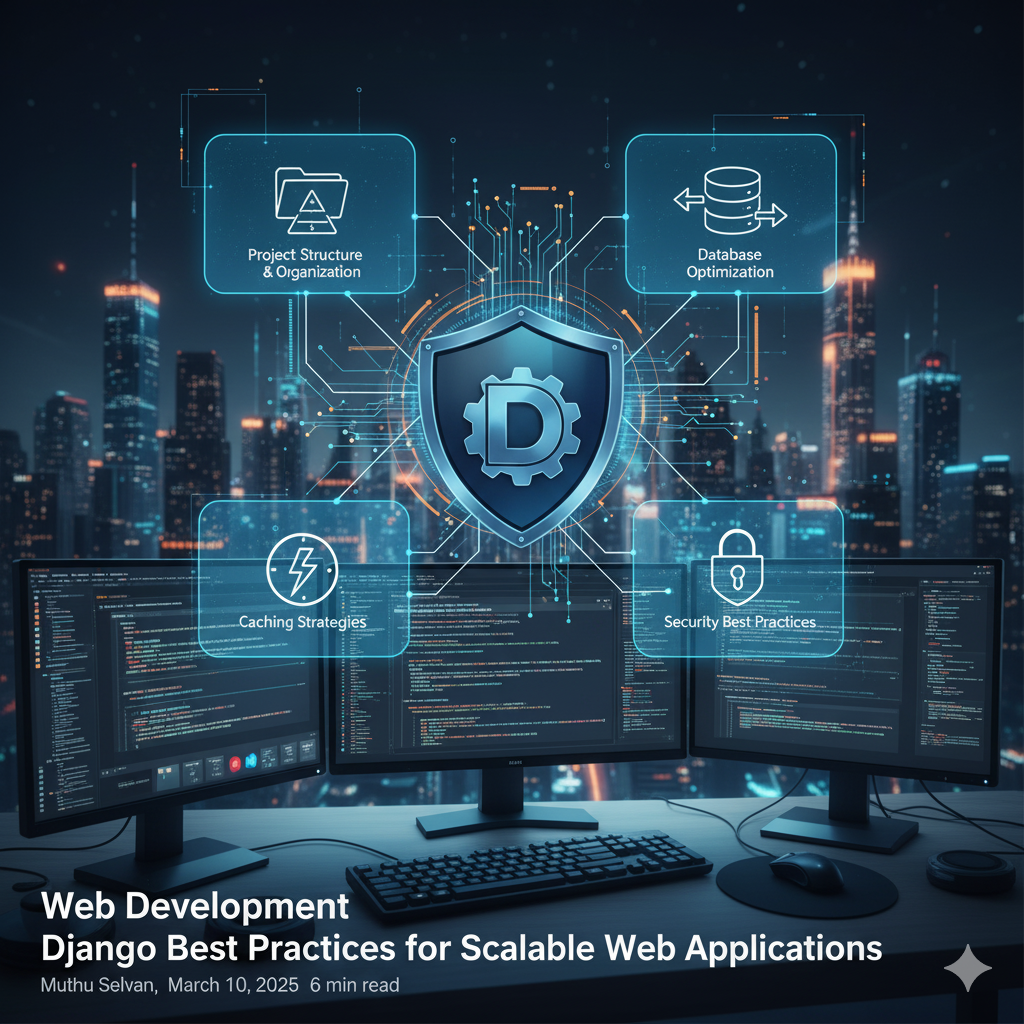
Building scalable Django applications requires following proven patterns and best practices that ensure your codebase remains maintainable as it grows.
1. Project Structure
Organize your Django project with a clear separation of concerns. Use apps to group related functionality and keep your settings modular for different environments.
2. Database Optimization
Use select_related() and prefetch_related() to minimize database queries. Always add indexes to frequently queried fields and use database connection pooling in production.
3. Caching Strategy
Implement caching at multiple levels — database query caching, view caching, and template fragment caching. Redis is an excellent choice for Django's cache backend.
4. Security Best Practices
Always use Django's built-in security features: CSRF protection, SQL injection prevention, and XSS protection. Keep your SECRET_KEY secure and never commit it to version control.
5. Testing
Write comprehensive tests using Django's test framework. Aim for high coverage on your models, views, and forms. Use factories (factory_boy) to create test data efficiently.
Need a scalable web application?
We build professional Django-powered web applications tailored to your business needs.
Get a Quote